God, AI, and the Mind
Whose Problem Is It?
For therapists, ministers, and educators facing a technology that arrived before anyone asked whether they were ready.
Wipf and Stock ·
Coming mid-NOVEMBER!
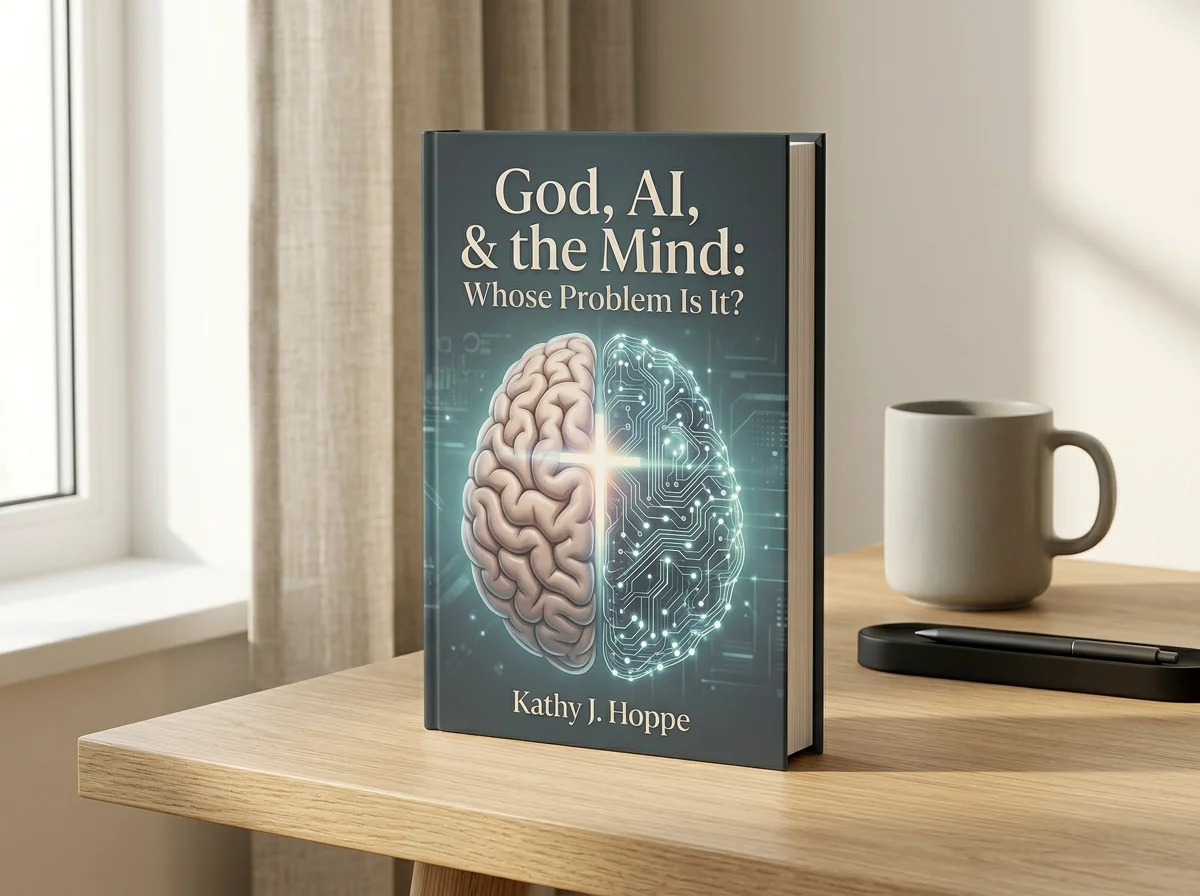
God, AI, and the Mind: Whose Problem Is It?
Coming December 2026 – January 2027 from Wipf & Stock
A faithful guide for helpers in the age of artificial intelligence
People are already bringing their grief, their marriages, and their faith to chatbots, often late at night and often alone. Some find comfort. Others find something that sounds caring but cannot truly care. Meanwhile, counselors, pastors, chaplains, and students are asking a hard question: should we be using these tools too?
In God, AI, and the Mind, Kathy Hoppe brings together decades of experience as a marriage and family therapist, minister, and educator to help answer that question. The book doesn't give a simple yes or no. Instead, it offers a way to think, so helpers can make wise, faithful decisions about AI now and as the technology keeps changing.
What's inside
Part I: The Foundation. A plain-language explanation of how today's AI works, including a reference chart of key terms for readers who aren't technical.
Part II: Ethical Concerns. An honest look at the real risks AI chatbots pose in counseling, ministry, and other caring work.
Part III: On Being Human. What Scripture and psychology teach about who we are: people made in the image of God, created for relationship, and called to care for the vulnerable.
Part IV: Faithful Decisions. Practical guidance for using AI wisely, including ways people and technology can work together without losing the human heart of care.
The Stewardship Triad
At the center of the book is the Stewardship Triad, Dr. Hoppe's original framework for weighing any AI tool before it touches a human life. It looks through three lenses:
Theological: What does this tool assume a human being is?
Psychological: Over time, does it strengthen a person's relationships, independence, and growth, or quietly replace them?
Ethical: What do I owe this person as their helper?
Five movements turn those lenses into practice: personhood, relationship, truthfulness, justice, and limits.
Who this book is for
Christian counselors, therapists, and social workers
Pastors, chaplains, and church leaders
Students and faculty in counseling, psychology, social work, and ministry
Anyone who wonders how faith should shape the way we use AI
Neither alarmist nor naive, God, AI, and the Mind helps readers embrace what is good in technology while keeping people, and the God who made them, at the center.
Join the launch to be the first to know when pre-orders open.
Link the button to your email sign-up block. When the cover arrives, put it beside the title at the top. If you'd like a shorter version for your home page, about 50 words, I can write that too.